• Skip to primary navigation
  • Skip to main content
  • Skip to footer
Tej Kohli Foundation

Tej Kohli Foundation

Rebuilding People And Communities

  • About
  • Our History
  • Eye Care
    • Tej Kohli & Ruit Foundation
    • Tej Kohli Applied Research
    • Tej Kohli Cornea Institute
    • Tej Kohli Cornea Program
  • Future Bionics
  • Giving
    • Funda Kohli
    • COVID-19 Response
  • News
  • Blog
  • Contact

Resources

How Effective is Low Vision Service Provision? A Systematic Review

November 14, 2012

Abstract:

Visual impairment is a large and growing socioeconomic problem. Good evidence on rehabilitation outcomes is required to guide service development and improve the lives of people with sight loss. Of the 478 potentially relevant articles identified, only 58 studies met our liberal inclusion criteria, and of these only 7 were randomized controlled trials. Although the literature is sufficient to confirm that rehabilitation services result in improved clinical and functional ability outcomes, the effects on mood, vision-related quality of life (QoL) and health-related QoL are less clear. There are some good data on the performance of particular types of intervention, but almost no useful data about outcomes in children, those of working age, and other groups. There were no reports on cost effectiveness. Overall, the number of well-designed and adequately reported studies is pitifully small; visual rehabilitation research needs higher quality research. We highlight study design and reporting considerations and suggest a future research agenda.

Authors:

Alison M. Binns, PhD, Catey Bunce, DSc, Chris Dickinson, PhD, Robert Harper, DPhil, Rhiannon Tudor-Edwards, DPhil, Margaret Woodhouse, PhD, Pat Linck, MSc, Alan Suttie, CertEd, Jonathan Jackson, PhD, Jennifer Lindsay, BSc, James Wolffsohn, PhD, Lindsey Hughes, BSc, Tom H. Margrain, PhD

Published in:

Survey of Ophthalmology, Volume 57, Issue 1, 2 January 2012, Pages 34–65

Access the full article at http://www.sciencedirect.com/science/article/pii/S0039625711001354

Filed Under: Resources

IAPB position on GBD data

November 14, 2012

The Global Burden of Disease (GBD) data benefits from a sophisticated methodology that gives greater precision and disaggregation by age groupings and by blindness versus visual impairment. It is complementary with the World Health Organization Prevention of Blindness and Deafness(WHO PBD) unit study, with each playing a different role.

Documents Download

IAPB position on GBD data (pdf)
IAPB position on GBD data (docx)

Filed Under: Resources

National Eye Health Coordinator Manual

September 3, 2012

This manual is intended to help National Eye Health Coordinators (NECs) in developing countries to understand and fulfil their roles.

While it is impossible to produce one set of guidelines and suggestions that will be ideal for every country, there are enough similarities in the problems faced that some generalisations are appropriate and useful. It will be up to the individual NECs who use this manual to consider each issue and decide what is relevant in his/her country.

Although the text is directed at NECs, much material in the manual will be useful to other members of the National Prevention of Blindness Committees (NPBC) and members of NGO/IAPB eye care forums as well.

Documents Download

National Eye Health Coordinator Manual
NEC Manual Accompanying PowerPoint Slides

Filed Under: Resources

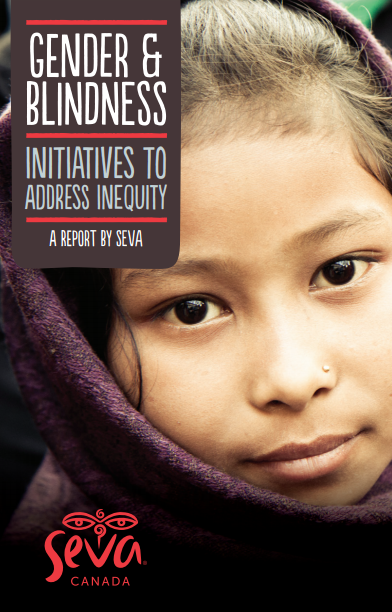
Gender & Blindness – initiatives to address inequity

July 14, 2012

Globally, two-thirds of all blind people are women, primarily because they are less likely to receive services, compared to men. In many settings, this disparity is even more pronounced between girls and boys.

Seva has taken explicit leadership in the gender and blindness global initiative. All Seva-supported projects work towards achieving gender equity by focusing on overcoming cultural and economic barriers to access by women and girls.

The barriers that prevent women and girls from receiving surgery vary locally and can include:

  • Cost of surgery
  • Inability to travel to a surgical facility
  • Differences in the perceived value of surgery
  • Lack of access to information and resources
  • Fear of a poor outcome

Awareness of the problem is not enough. Political will and social action are needed to address gender inequities in the use of eye care services. We believe that in order to achieve the goals of VISION 2020, gender inequities in eye care must be a priority for all organizations.

Courtesy of Seva Canada.

Documents Download

Gender & Blindness – initiatives to address inequity

Filed Under: Resources

Eye Health Systems Assessment (EHSA)

January 29, 2012

Over the last few years, increasing efforts have been invested in exploring the relationship between the eye health system and the general health system. A general consensus is emerging in the international eye care community that the effectiveness of eye care interventions can only be improved through better understanding of how health systems function.

The objectives of EHSA are to:

  • Enable national and international actors involved in eye care to assess a country’s eye health system, in order to diagnose the relative strengths and weaknesses of the eye health system, to promote/allow/encourage/plan.
  • Assist national eye health authorities and international organisations (i.e. non-governmental organisations and donors) to include eye health systems strengthening interventions in eye care programme design and implementation.

Documents Download

Eye Health Systems Assessment

Filed Under: Resources

A benefits framework for eliminating avoidable blindness and visual impairment

November 14, 2011

Globally there are 32.4 million people who are blind, and a further 190.6 million people who are visually impaired to the point that their ability to function is negatively impacted. A large proportion of the world’s blind and visually impaired live in low and middle income countries. The cost of expanding and sustaining primary and secondary health services to treat avoidable blindness and vision impairment is substantial. In 2011 PwC and Three Rivers estimated the need for additional expenditure of US$394.2 billion over 10 years if the goal of eliminating avoidable blindness is to be achieved by 2020, noting that $266.0 billion, over two thirds of this is required in the developed world rather than in poorer countries, where $128.2 billion is allocated. Excluding high income countries, the additional investment required to eliminate avoidable blindness and visual impairment was estimated to be US$128.2 billion. The US$394.2 figure represents an increase in global eye health expenditure of around 7% over that period, with two thirds of the expenditure being directed to high income economies.

Documents Download

Benefits Framework

Filed Under: Resources

  • « Go to Previous Page
  • Page 1
  • Interim pages omitted …
  • Page 68
  • Page 69
  • Page 70
  • Page 71
  • Page 72
  • Page 73
  • Go to Next Page »
  • Tej Kohli & Ruit Foundation
  • Tej Kohli
  • Contact
  • Our History
  • Eye Care
  • Giving
  • Contact


Copyright © 2026 . Tej Kohli Foundation All Rights Reserved