• Skip to primary navigation
  • Skip to main content
  • Skip to footer
Tej Kohli Foundation

Tej Kohli Foundation

Rebuilding People And Communities

  • About
  • Our History
  • Eye Care
    • Tej Kohli & Ruit Foundation
    • Tej Kohli Applied Research
    • Tej Kohli Cornea Institute
    • Tej Kohli Cornea Program
  • Future Bionics
  • Giving
    • Funda Kohli
    • COVID-19 Response
  • News
  • Blog
  • Contact

Resources

Ghana Blindness and Visual Impairment Study

June 8, 2017

Significant progress has been made in avoiding blindness and visual impairment, particularly from infectious diseases. However, visual impairment remains a major global health issue with about 285 million visually impaired (39 million blind and 246 million having low vision) (WHO Fact Sheet No. 282). Though visual impairment is a debilitating condition, there are limited country-specific estimates. In Africa, few studies on blindness and visual impairment have been conducted, with only one from Ghana. However, these studies were not detailed and nationally representative. The very expensive and time-consuming nature of national blindness and low vision surveys probably explains their rarity in many African countries.
Documents Download

Ghana Study BVIS

Filed Under: Resources

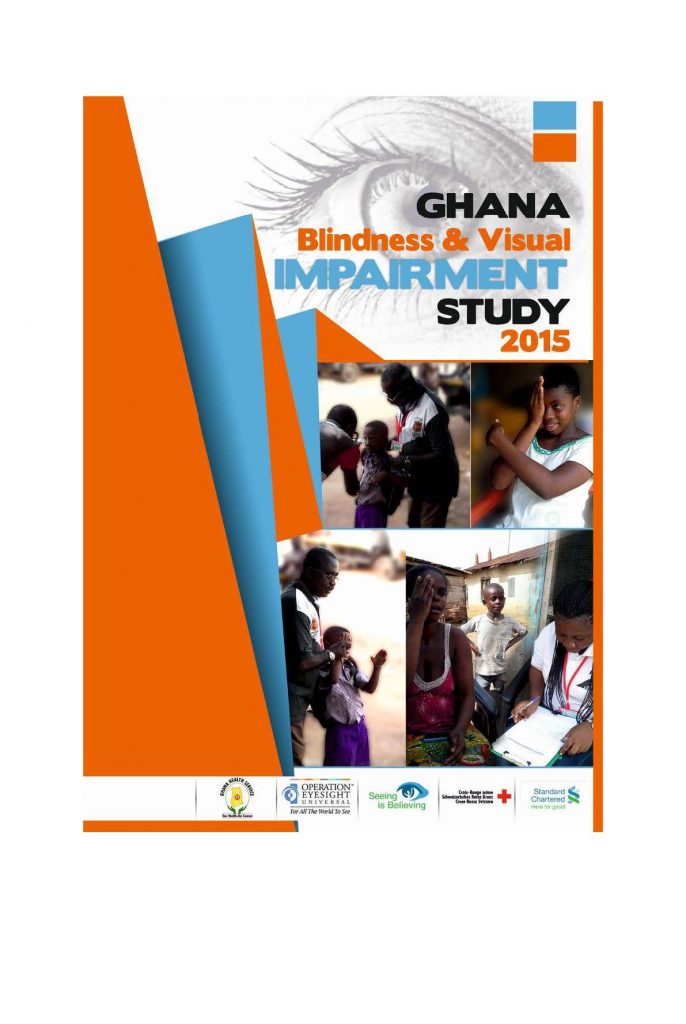
Ghana Blindness and Visual Impairment Survey

June 6, 2017

The Ghana Blindness and Visual Impairment Study (GBVIS) was undertaken to estimate the causes, magnitude and distribution of avoidable blindness and visual impairment among different age groups, sexes and zones of residence in Ghana. The results of the study are nationally representative and provide quality data for effective planning, allocating resources and collaborating with other partners on eye health interventions.
The findings will further serve as a basis for designing future interventions, setting up monitoring indicators to track performance as well as consolidating the joint efforts of policy makers, partners and eye health professionals working towards the attainment of integrated, accessible, sustainable, equitable and quality eye health to all people living in Ghana. Such interventions, when successfully implemented, could be replicated and validated as an evidence-based model and could be considered for use in other parts of Africa and other developing countries.

Documents Download

Ghana Blindness and Visual Impairment Survey

Filed Under: Resources

Evaluation of East Africa Child Eye Health Programme

May 30, 2017

The Brien Holden Vision Institute (BHVI) implemented a four-year project on Child Eye Health (CEH) in East Africa (Kenya, Uganda and Tanzania) as part of a consortium. The project was supported by the Seeing is Believing programme, an initiative of Standard Chartered Bank. The programme aimed to i) improve the quality of eye health services and access for all children aged 0-15 years; ii) establish the School Eye Health Programme as a sustainable and efficient model of delivering eye health services to children; iii) improve the quality of early intervention and education of children with vision impairment by ensuring that the children receive necessary specialised educational support; iv) evaluate the model approaches for promoting child eye health in East Africa, document and publish the findings to inform future strategies and replication; v) embed Child Eye Health in the policies and programme work of the Ministries of Health and Education.

Documents Download

Evaluation of East Africa Child Eye Health Programme

Filed Under: Resources

ICO Guidelines for Diabetic Eye Care

April 28, 2017

Diabetic retinopathy, one of the complications of diabetes (others being vascular disease, renal failure and leg amputation) is an important cause of avoidable blindness globally. The risk of diabetic retinopathy (DR) increases with increasing duration of diabetes and poor control of blood glucose, cholesterol and high blood pressure. DR cannot be entirely prevented, but the severe stages which are sight threatening can be reduced by improved control of risk factors. Visual loss can be controlled by early detection and treatment (i.e. laser treatment and/or injection of agents into the eye).

Documents Download

ICO Guidelines for Diabetic Eye Care

Filed Under: Resources

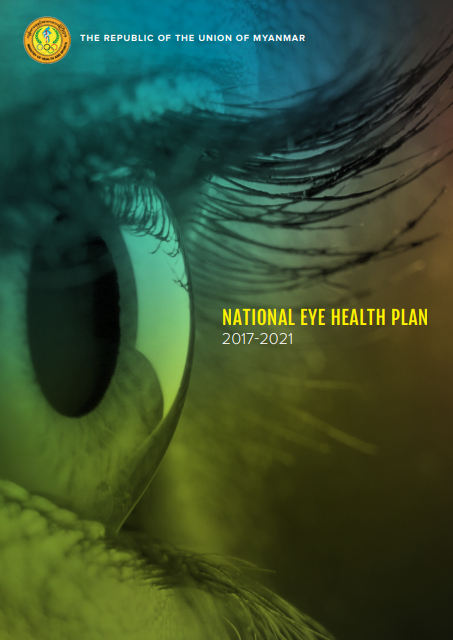
Myanmar National Eye Health Plan 2017-2021

March 30, 2017

The National Eye Heath Plan 2017-2021(NEPH), the country’s first national strategic plan for eye health was launched on 23 March 2017. It will guide and align the efforts of the Ministry of Health and Sports (MOHS) and other stakeholders to significantly reduce avoidable blindness and address vision impairment in Myanmar.

The purpose of Myanmar’s National Eye Health Plan is “to improve access to comprehensive and quality eye care services by strengthening the eye care system in order to reduce avoidable Visual impairment by 25% by year 2020”.

Documents Download

Myanmar National Eye Health Plan 2017-2021

Filed Under: Resources

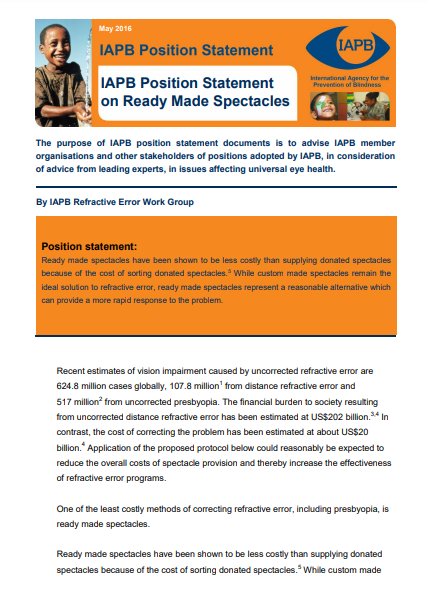
Position Paper on Ready Made Spectacles

March 15, 2017

Ready made spectacles have been shown to be less costly than supplying donated spectacles because of the cost of sorting donated spectacles. While custom made spectacles remain the ideal solution to refractive error, ready made spectacles represent a reasonable alternative which can provide a more rapid response to the problem.

Documents Download

Position Paper on Ready Made Spectacles

Filed Under: Resources

  • « Go to Previous Page
  • Page 1
  • Interim pages omitted …
  • Page 45
  • Page 46
  • Page 47
  • Page 48
  • Page 49
  • Interim pages omitted …
  • Page 73
  • Go to Next Page »
  • Tej Kohli & Ruit Foundation
  • Tej Kohli
  • Contact
  • Our History
  • Eye Care
  • Giving
  • Contact


Copyright © 2026 . Tej Kohli Foundation All Rights Reserved